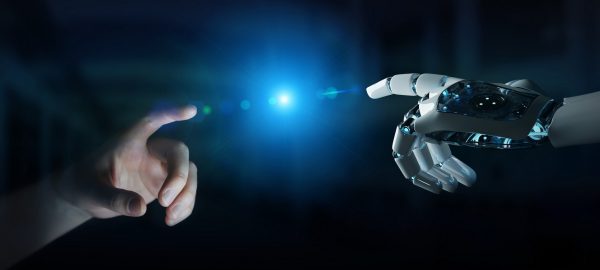
The foundation of human-robotic collaboration is on solid footing and nearly here. In this talk, I will discuss four on-going projects in The77Lab (MIT-Mechanical Engineering) related to developing simple tools to augment humans, to agricultural robotics (selecting better quality seeds), to digital transformation (training novice operators), to rehabilitation robotics (delivering movement therapy and evaluating outcomes). A key aspect to highlight among these examples is the dynamic nature of human-robotic collaboration. Many of us design(ed) fabulous machines and expect(ed) humans to get entrained into their use, while others attempt(ed) to have robots understand human intentions and entrain them to humans. Both of these visions are very useful but somehow “static.” It might be better to focus on “dynamic” change: as humans learn how to use robots, robots should adapt their behavior, which will lead to further human adaptation and so on. Another aspect to consider when examining human-robot collaboration is that “moonshots,” as for example fully autonomous vehicles operating in complex variable environments, are exciting but alternative approaches that include the human-in loop might be achievable in shorter order and significantly impact the march of progress. Fundamental to human-robotic collaboration is the expertise into fusing AI and robotics, so that robots can then properly and truly interact and manipulate the world.



Robotics and AI: Pillars of the next Generation of Rehabilitation Agricultural, and Industrial Robotics
Are you interested in learning the profession of the future?
Faculty of Mechanical Engineering, Technion - Israel Institute of Technology, Haifa
"*" indicates required fields